CELLIVITY is available to adults only. Supplement pages are general product information; peptide records are not a sales offer and are not for human use.
Age confirmation is a declaration, not identity verification. Restricted research access still requires separate professional eligibility checks.Privacy and legal notice ↗
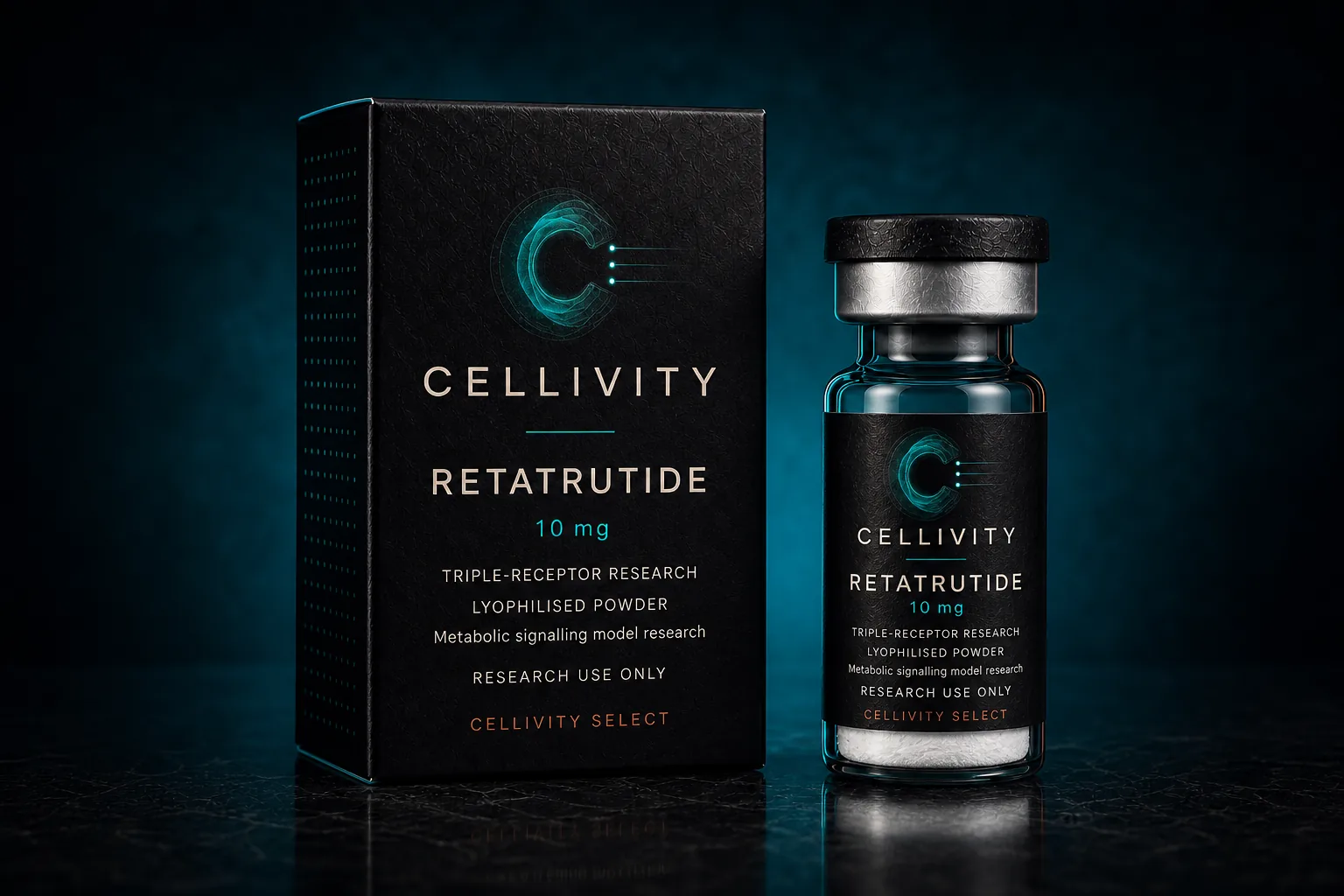
Open full-size image ↗Packaging concept; the selected format is shown below.Selected format: 30 mg
This image is a CELLIVITY packaging concept. Current stock arrived in clear vials without individual labels; product details are on the outer box of 10 vials. Packaging for your selected quantity will be confirmed when you enquire.
CELLIVITY PEPTIDE LABS · CEL-P-RET-001
Retatrutide
Lyophilised research-vial concept
For laboratory research only · Not intended for human or veterinary use.
THAILAND LAUNCH PRICE฿7,00030 mg · per vial · tax and delivery confirmed at enquiry
Received · batch documentation under reviewAvailability is confirmed for this exact format before any commitment.
Retatrutide is an investigational peptide designed to activate three metabolic receptor systems: GIP, GLP-1 and glucagon. It is being studied as a drug candidate, but a supplier-labelled vial is not the same material as a controlled clinical-trial product.
Research focus
Investigational GIP, GLP-1 and glucagon receptor agonism.
Current evidence context
Published clinical findings are still part of an evolving development programme. Retatrutide has no established longevity indication, and supplier material cannot inherit the identity, manufacturing controls or evidence of a trial product.
Questions this record follows
How does the balance of three receptor signals affect metabolic outcomes?
Which changes persist across longer controlled follow-up?
What safety pattern emerges as exposure and study duration increase?
Follow the sources
Registry entries identify reference substances. Literature links describe research and do not certify this product or its batch.
Request current availability for a lawful institutional, analytical or laboratory purpose. We confirm the exact presentation, price, batch and document state before any next step.
Exact presentation review
Jurisdiction and purpose check
Batch-document confirmation
No medical or human-use guidance
SELECTED PRODUCTRetatrutideCEL-P-RET-001 · response after manual review
Retatrutide: before you enquire
What exactly does the selected format mean?+
The mg or IU value is the declared material content per vial; it is not the container volume. Your selected presentation and quantity are saved with your enquiry. The final price is confirmed in the response.
Which batch will be supplied?+
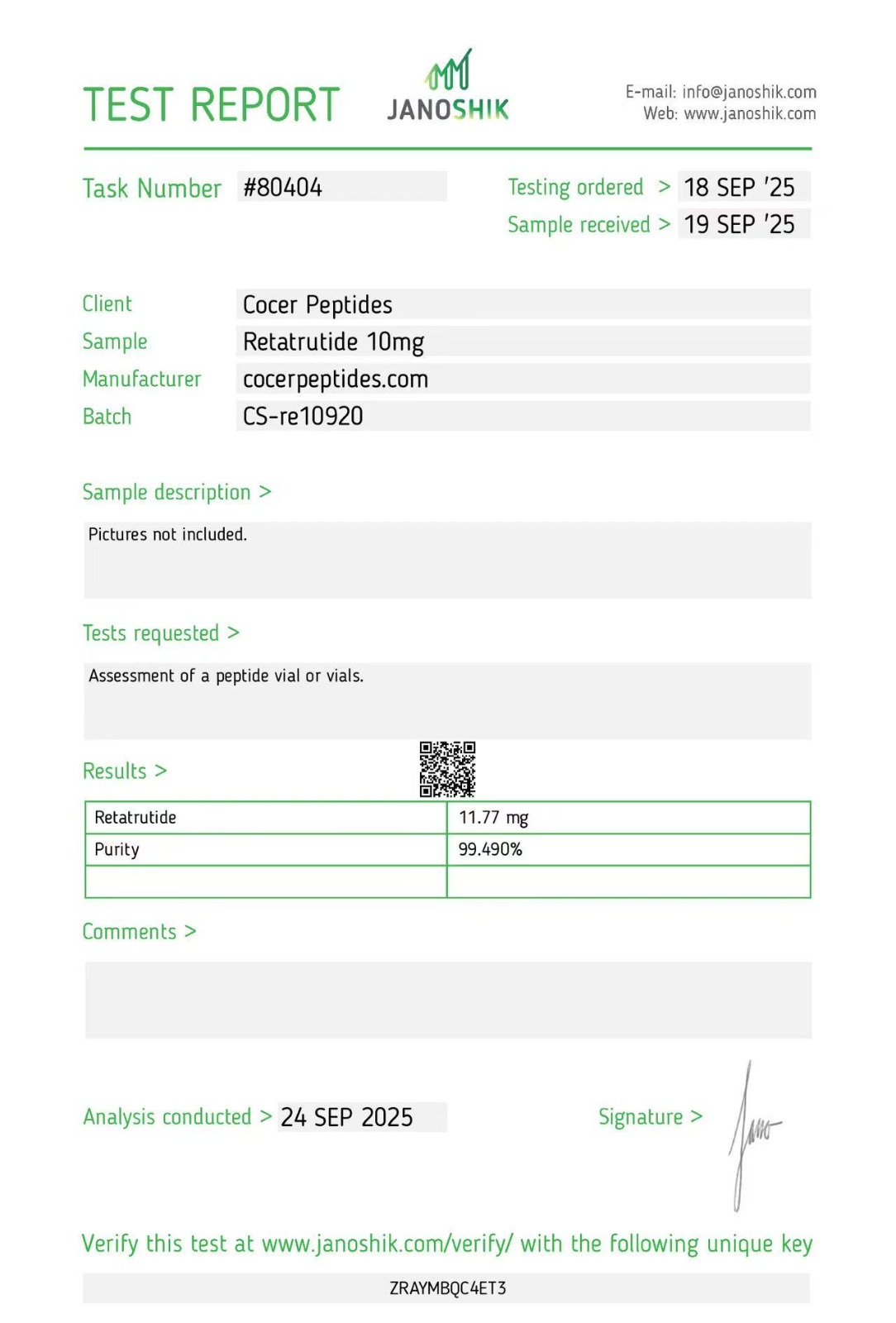
The specific batch and its documents are confirmed in the response. Files shown here may be supplier reference samples; the current record does not yet contain a qualified CELLIVITY lot dossier.
When can it arrive in Thailand?+
For confirmed local stock, the planned window is 2–3 working days in Thailand. Pattaya timing is agreed directly. Incoming or specially sourced products have a separate estimate, confirmed before a commitment.
Can I enquire about several products together?+
Yes. Add each format and quantity to the cart, then send one availability enquiry. Your selected items are kept together for review.
CELLIVITY
Retatrutide
CEL-P-RET-001 · 10 mg / 20 mg / 30 mg
Retatrutide is an investigational peptide designed to activate three metabolic receptor systems: GIP, GLP-1 and glucagon. It is being studied as a drug candidate, but a supplier-labelled vial is not the same material as a controlled clinical-trial product.
Investigational GIP, GLP-1 and glucagon receptor agonism.
Other names
LY3437943 · GLP-3 · triple-G receptor agonist
PubChem CID
171390338
CAS number
2381089-83-2
Molecular formula
C221H342N46O68
Molecular weight
4731.4 g/mol
Peptide length
39 amino acids
Compound class
Synthetic triple-incretin receptor agonist
Follow the sources
Published clinical findings are still part of an evolving development programme. Retatrutide has no established longevity indication, and supplier material cannot inherit the identity, manufacturing controls or evidence of a trial product.
How does the balance of three receptor signals affect metabolic outcomes?
Which changes persist across longer controlled follow-up?
What safety pattern emerges as exposure and study duration increase?